
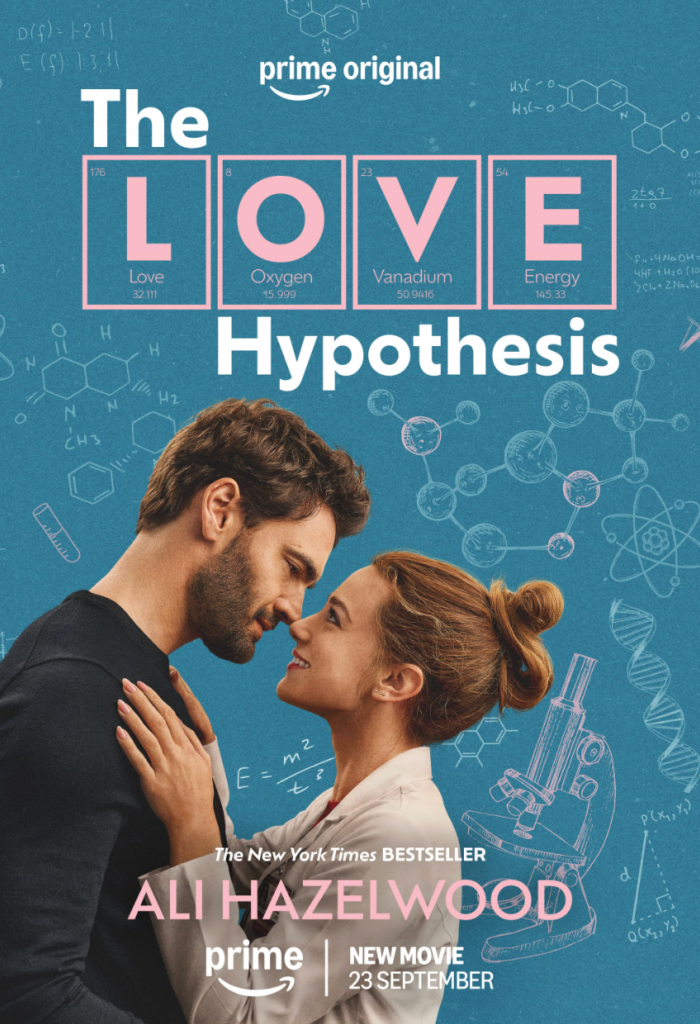
Ali Hazelwood’s The Love Hypothesis officially hits Prime Video on September 23rd, which means we have a little over a month left to answer one very important question:
Should you read the book before watching the movie?
Well, I finally read it.
And by “read it,” I mean I picked it up and somehow emerged approximately seven hours later having finished the entire thing.
So…that probably tells you something.
I gave The Love Hypothesis a 3.9/5, and while there were a few moments that frustrated me (we’ll get to that third-act miscommunication), this was such a fun, easy read.
I loved Olive. Adam seriously grew on me. Their banter was hilarious. The academic setting was refreshingly different. And watching their fake relationship slowly turn into a very-not-fake relationship?
Yeah. I ate it up.
So if you’re staring at The Love Hypothesis on your TBR wondering whether you should squeeze it in before September 23rd, my answer is:
Yes. Absolutely. You still have time.
And here’s why.
First, What Is The Love Hypothesis About?
Olive Smith is a third-year biology Ph.D. candidate at Stanford University who is far more comfortable conducting research than navigating her love life.
When Olive needs to convince her best friend that she has moved on from a previous relationship, she makes a completely rational decision:
She kisses the first man she sees.
As one does.
Unfortunately for Olive, the random man she grabs happens to be Adam Carlsen—a brilliant, intimidating professor with a reputation for being, well…
Kind of terrifying.
Instead of immediately ending Olive’s little experiment, Adam agrees to fake date her.
And I think we all know where this is going.
What starts as a completely fake relationship slowly turns into friendship, trust, genuine care, and eventually something neither Olive nor Adam expected.
It’s fake dating. It’s grumpy x sunshine. It’s academic romance.
And yes, it’s a lot of fun.
1. Olive and Adam’s Banter Is One of the Best Parts
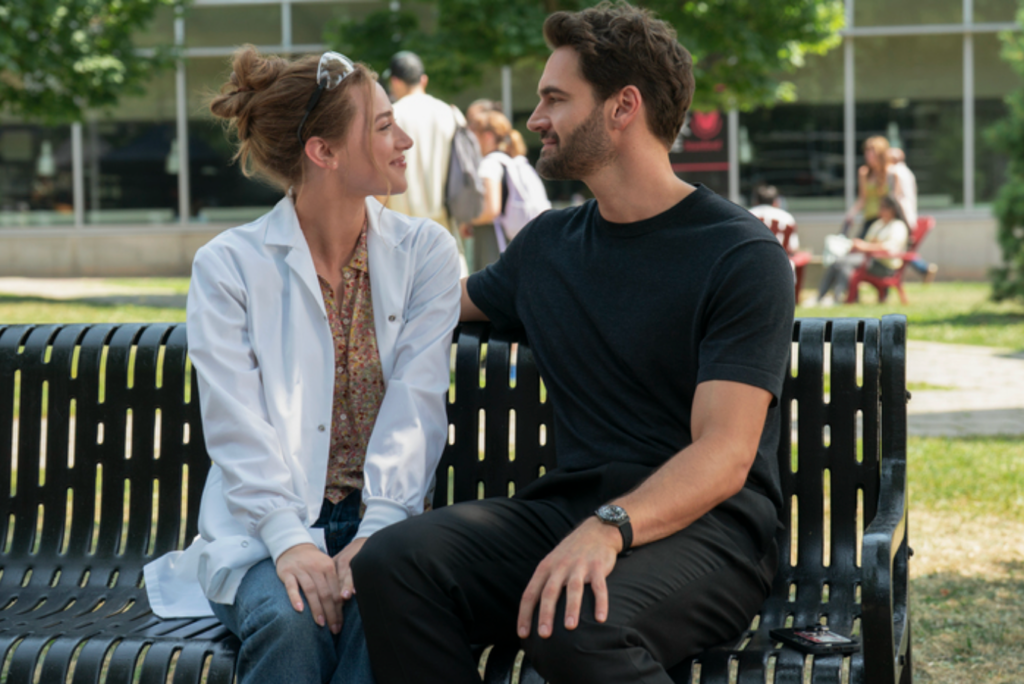
If there’s one thing I need this movie to get right, it’s the banter.
Olive and Adam are hilarious together.
Adam starts the book as the stereotypical intimidating, grumpy professor. Olive, meanwhile, is quirky, awkward, expressive, and completely willing to give him a hard time.
And Adam?
He just…takes it.
I loved it.
There’s something particularly funny about their dynamic because they’re pretending to be in a relationship. Since neither of them believes they’re actually trying to impress the other person romantically, they almost skip that stage where two people are attempting to present the absolute best versions of themselves.
Instead, they’re just themselves.
Olive roasts him. Adam is grumpy. Inside jokes develop. They become increasingly comfortable around each other.
And somewhere along the way, their fake relationship starts feeling surprisingly real.
Reading those interactions before seeing Lili Reinhart and Tom Bateman recreate that dynamic is one of the biggest reasons I’d recommend reading the book first.
2. You Get to Watch the Fake Relationship Become Something Real
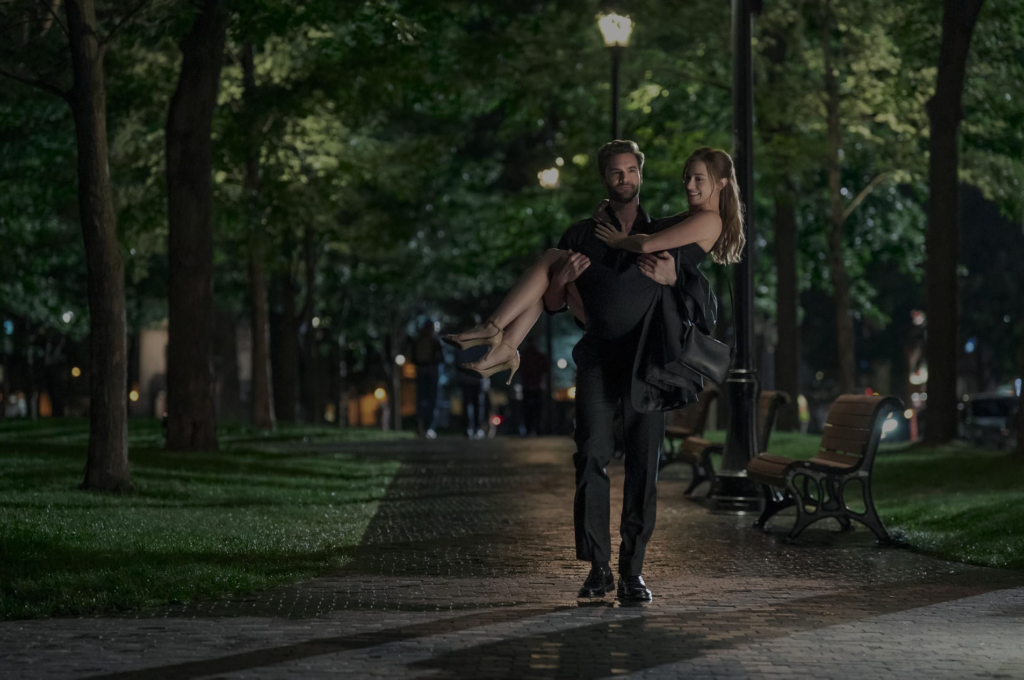
Look, there’s a reason fake dating is such a popular romance trope.
It works.
Every. Single. Time.
But what surprised me was how much I enjoyed the friendship underneath the romance.
Olive and Adam don’t simply go from fake dating to suddenly falling in love.
They gradually learn about each other.
They become comfortable together. They develop inside jokes. They start trusting one another. They show up for each other.
And eventually, you realize that these two people who weren’t supposed to have a real relationship have developed one anyway.
Their chemistry is fantastic, but it was that progression from fake dating → friendship → genuine care → romance that really sold me on them as a couple.
I’m especially excited to see how the movie handles that slow evolution.
3. Adam Carlsen Is More Than the Grumpy Professor
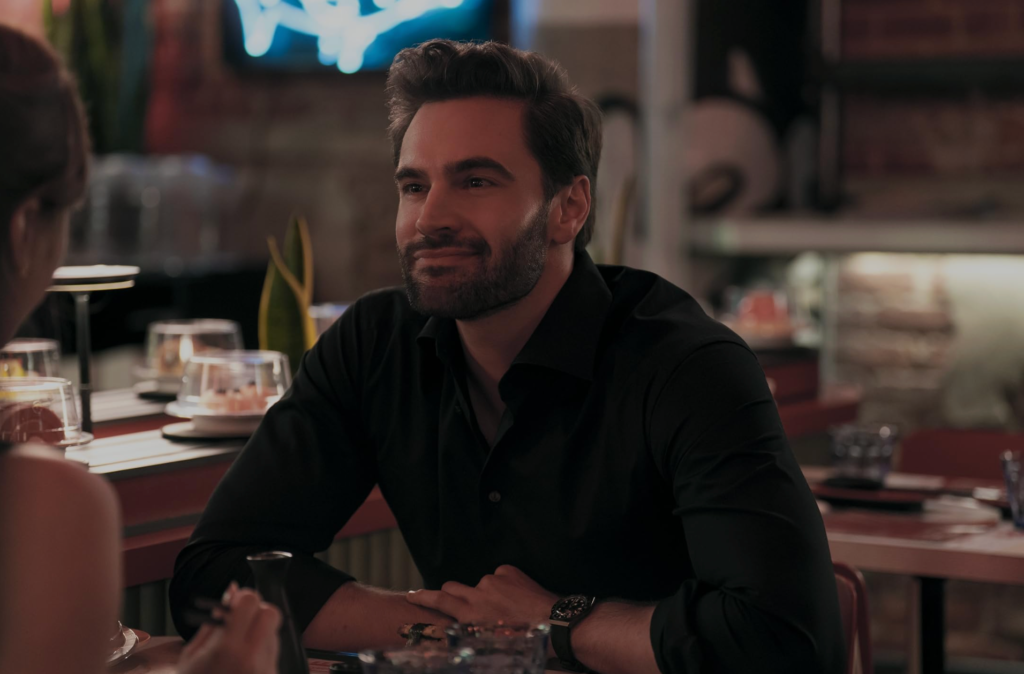
I’ll admit it.
Adam had to grow on me.
At the beginning, everyone talks about this man like he’s the final boss of Stanford University.
He’s intimidating. He’s brutally honest. He’s notoriously difficult. His students are terrified of him.
But as Olive gets to know him, we get to know him too.
Slowly, you begin to realize that Adam isn’t grumpy simply for the sake of being grumpy. He’s incredibly serious about science, and he expects a lot from the people around him because he genuinely wants them to succeed.
Then we get to see the person underneath that intimidating reputation.
His relationship with Olive reveals a much softer, more caring side of him, and that contrast ended up being one of my favorite parts of the book.
Knowing that going into the movie makes me particularly excited to see what Tom Bateman does with Adam.
4. Olive Is Delightfully Chaotic
I LOVED Olive.
She’s brilliant and ambitious.
She’s also awkward, anxious, quirky, an Olympic-level overthinker, and occasionally completely oblivious to something that is painfully obvious to everyone except her.
Basically?
She’s extremely relatable.
And there are definitely questionable decisions. Olive occasionally had me mentally yelling:
Olive. Girl, WHAT are you doing?!
But that’s also what made her so relatable.
She isn’t a perfectly polished romance heroine. She’s a young woman trying to build a career, support her friends, navigate academia, and somehow figure out what she’s supposed to do about the very grumpy professor she definitely isn’t supposed to be falling for.
5. I LOVED the Academic/STEM Setting
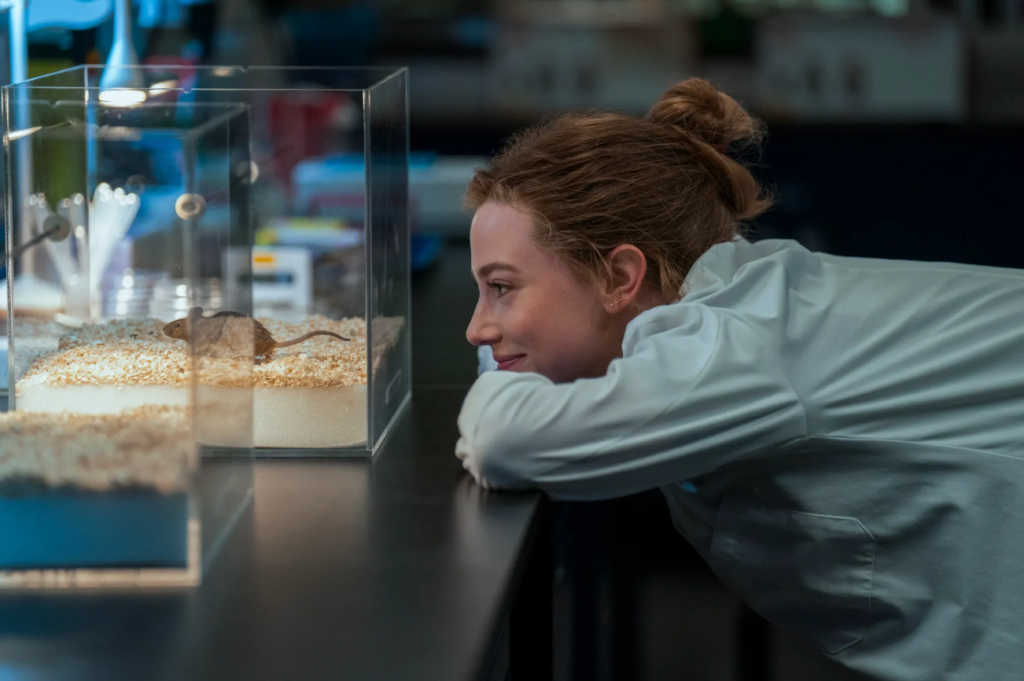
This was one of my favorite parts of the entire book.
The Love Hypothesis doesn’t just stick Olive in a lab, throw some goggles on her, and say:
Look! Science romance! 🧪💕
Her academic career actually matters.
We see graduate-school pressures, research funding, mentorship, conferences, academic politics, and the uncertainty that comes with trying to establish yourself in a competitive field.
And I particularly loved the attention Hazelwood gives to the experiences of women in STEM.
Olive isn’t simply dealing with romance problems.
She’s trying to build a career in a field where confidence, power dynamics, and being taken seriously can have very real consequences.
One of my favorite moments involves Olive receiving a reminder from a female mentor to carry herself with the kind of confidence often afforded to people who have never had to question whether they belong.
It’s funny, but there’s also something painfully recognizable underneath the joke.
Those moments gave Olive’s story more substance for me. Her ultimate goal isn’t finding Adam.
She has dreams that belong entirely to her.
The romance complements her story rather than becoming her entire story.
And now I desperately want to see Olive and Adam’s academic world brought to life on screen.
Give me the labs.
Give me the conferences.
Give me Stanford.
Give me Adam terrifying graduate students.
I’m ready.
6. Let’s Talk Romance…and Spice 🔥
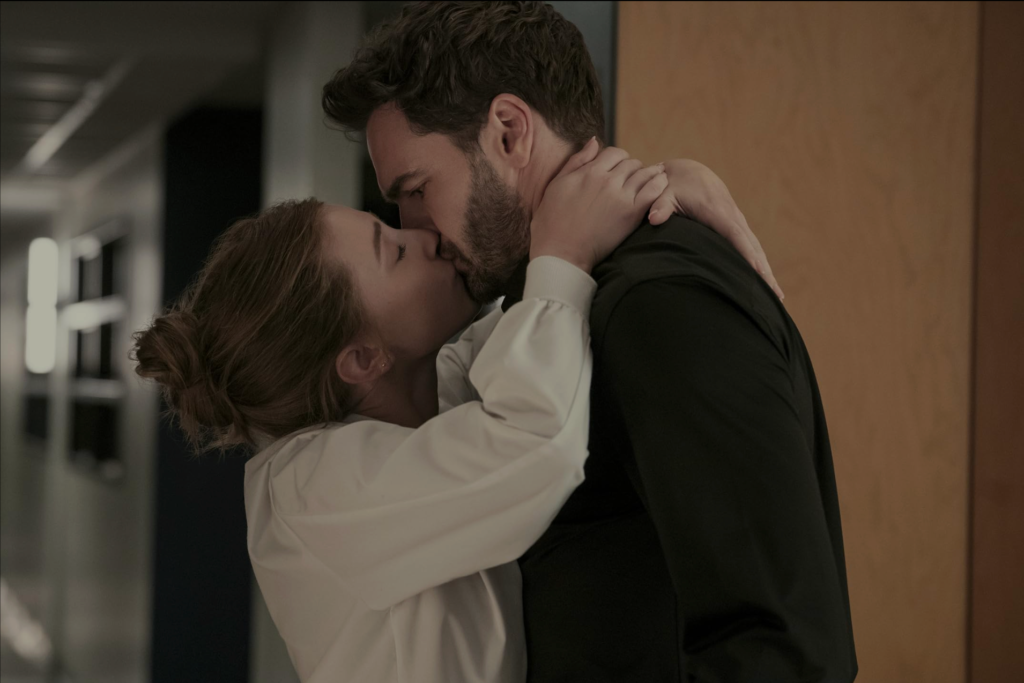
Okay, important information.
If you’re picking up The Love Hypothesis expecting wall-to-wall spice:
Adjust expectations accordingly.
My rating?
🌶️🌶️ 2/5 for spice.
There is spice.
But this book is much more about chemistry.
And honestly? I preferred it that way.
The banter.
The glances.
The awkward situations.
The mutual pining.
The tiny moments where it’s becoming painfully obvious that these two people care about each other while Olive remains completely convinced that Adam couldn’t possibly be interested in her.
Girl, please.
Watching their relationship slowly develop was much more satisfying to me than simply waiting for the spicy scenes.
And when things finally do progress, it feels earned because we’ve watched them build an actual relationship first.
7. My Biggest Complaint: There is Some Miscommunication
Sigh.
Okay…let’s talk.
I hate the miscommunication trope.
HATE.
Especially when I’m reading a romance and I know these two supposedly brilliant human beings could solve approximately 90% of their problems by doing one revolutionary thing:
HAVING A CONVERSATION.
Olive.
Adam.
You are scientists.
Form a hypothesis.
Collect your data.
COMMUNICATE YOUR FINDINGS.
That being said, without getting into spoilers, Olive has some pretty understandable reasons for keeping certain things to herself. Remember, as far as she’s concerned, this relationship has an expiration date. She’s convinced Adam doesn’t actually have romantic feelings for her, and she doesn’t want to make their fake-dating arrangement uncomfortable by admitting that her feelings have become very, very real.
So while the miscommunication still frustrated me, it didn’t feel completely unreasonable for these characters either.
It didn’t ruin the book for me, but it was probably the biggest thing keeping The Love Hypothesis from reaching that 4.5- or 5-star territory.
I’m also really curious to see how the movie handles this part of the story. Adaptations sometimes streamline conflicts like this, and honestly? I wouldn’t be mad if the movie made a few changes here.
So…Should You Read The Love Hypothesis Before Watching the Movie?
YES.
Here’s my final scorecard:
⭐ Overall Rating: 3.9/5
🌶️ Spice: 2/5
😂 Banter: 4/5
🧪 Academic Setting: 5/5
💕 Fake Dating Shenanigans: 4/5
📖 Reading Experience: Easy, funny, romantic, and extremely bingeable
🎬 Current Movie Excitement Level: HIGH
And if you’re worried you don’t have enough time before September 23rd?
I finished this book in about seven hours.
Obviously everyone’s reading speed is different, but this was incredibly easy for me to fly through. You could absolutely make a weekend out of it.
Grab the book.
Get comfortable.
Meet Olive.
Meet Adam.
Question Olive’s decision-making abilities.
Become weirdly invested in a fake relationship that everyone except the two people involved can see is becoming real.
Yell JUST TALK TO EACH OTHER at least once.
And then you’ll be ready for September 23rd.
Because reading the book first gives you something the movie simply can’t recreate in exactly the same way:
Olive’s brain.
You get all the overthinking. The insecurities. The completely incorrect assumptions. The little moments where her perception of Adam starts to change.
You get to understand why she falls for him.
September 23? Please hurry. 💕