
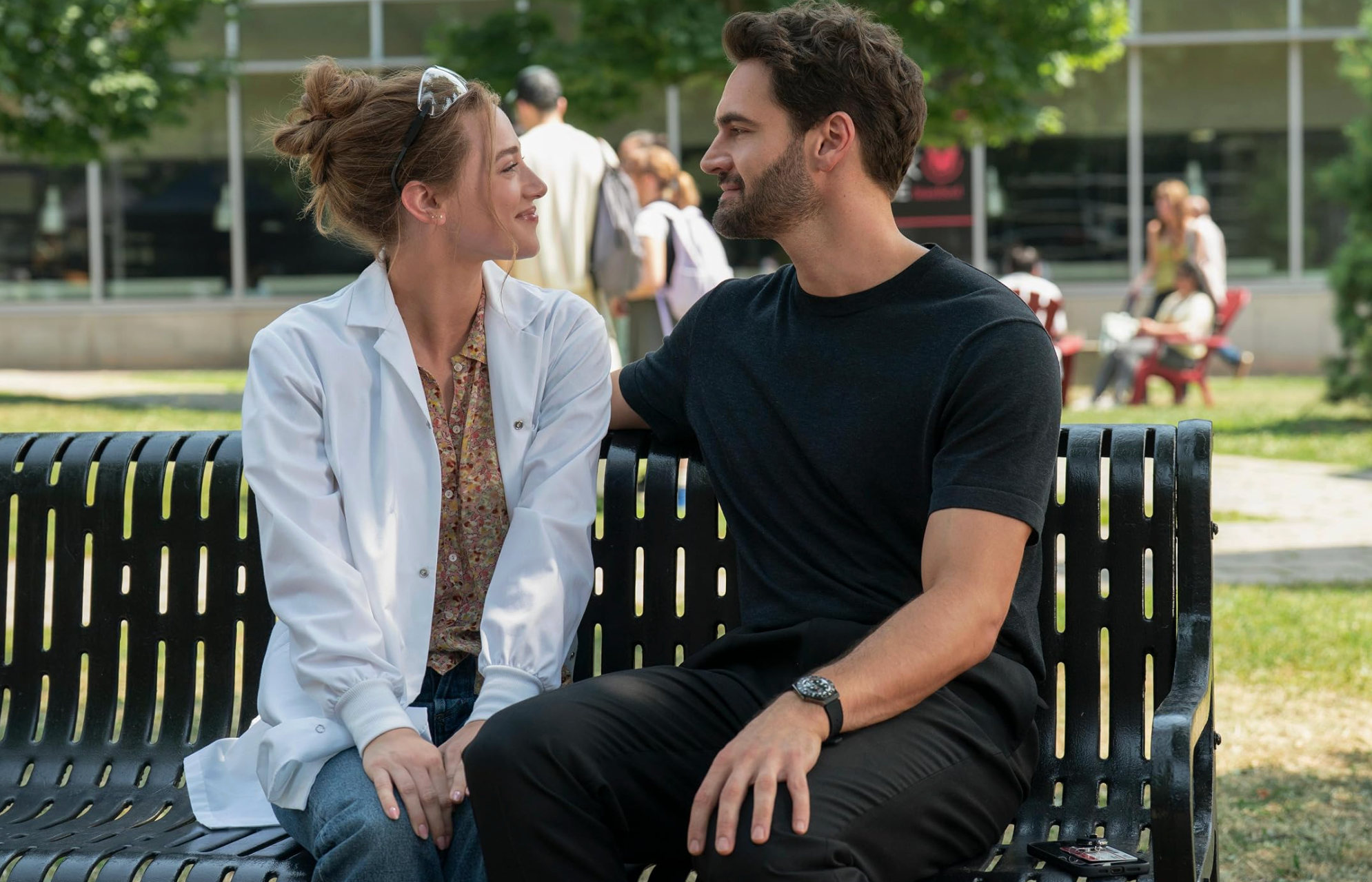
Calling all rom-com lovers and Ali Hazelwood fans: The Love Hypothesis has officially hit Prime Video! And if you loved the book as much as I did, I have very good news—the movie does not disappoint.
As someone who read the book before watching the adaptation, I went in fully prepared to notice every changed scene, missing moment, and wait…that didn’t happen like that decision. But honestly? One of the things that surprised me most was just how much of the book made it onto the screen.
In many ways, watching The Love Hypothesis felt like reading the book all over again—and that might have something to do with the fact that Ali Hazelwood herself served as an executive producer.
The adaptation keeps so much of what made the book work: Olive and Adam’s banter and chemistry, the friendships and camaraderie of Stanford’s academic world, the STEM setting, and, of course, the fake-dating chaos at the center of it all. And Lili Reinhart absolutely nails the quirky, lovable biology PhD student that is Olive Smith. (Duh.)
But faithful doesn’t mean identical.
The movie follows the same love story we know from the novel: Olive Smith and Adam Carlsen enter each other’s lives under rather unusual circumstances, strike up a mutually beneficial fake relationship, and—as any seasoned rom-com reader can probably predict—things don’t exactly stay fake 😉
But while the movie preserves the heart of Ali Hazelwood’s story, it makes a handful of notable changes along the way. Some streamline the story for the screen, while others change characters, relationships, or moments that book readers will definitely notice.
So, from the changes that genuinely surprised me to the ones that make a lot of sense for a movie adaptation, let’s break down the 5 biggest differences between The Love Hypothesis book and movie.
Warning: SPOILERS AHEAD
#1 The Movie Completely Leaves Out Dr. Holden Rodrigues
One of the most noticeable differences for book readers is that Dr. Holden Rodrigues is completely absent from the movie. While he isn’t essential to Olive and Adam’s love story, I actually missed what his character added to the book.
Holden is a Stanford professor and one of Adam’s longtime friends. He gives Olive a glimpse of Adam beyond his grumpy-professor reputation, even telling her how Adam stepped in as his platonic prom date after Holden’s boyfriend dumped him. Holden also makes it clear that he doesn’t trust Tom Benton—which, as we eventually learn, is for VERY good reason.
He even gets his own little romance with Olive’s friend Malcolm, and the two eventually go on a double date with Olive and Adam.
So while cutting Holden helps streamline the movie, we lose some insight into Adam’s softer side, some early foreshadowing about Tom, and an entire side romance.
#2 Olive’s Friends Don’t Know the Relationship Is Fake… Or Do They?
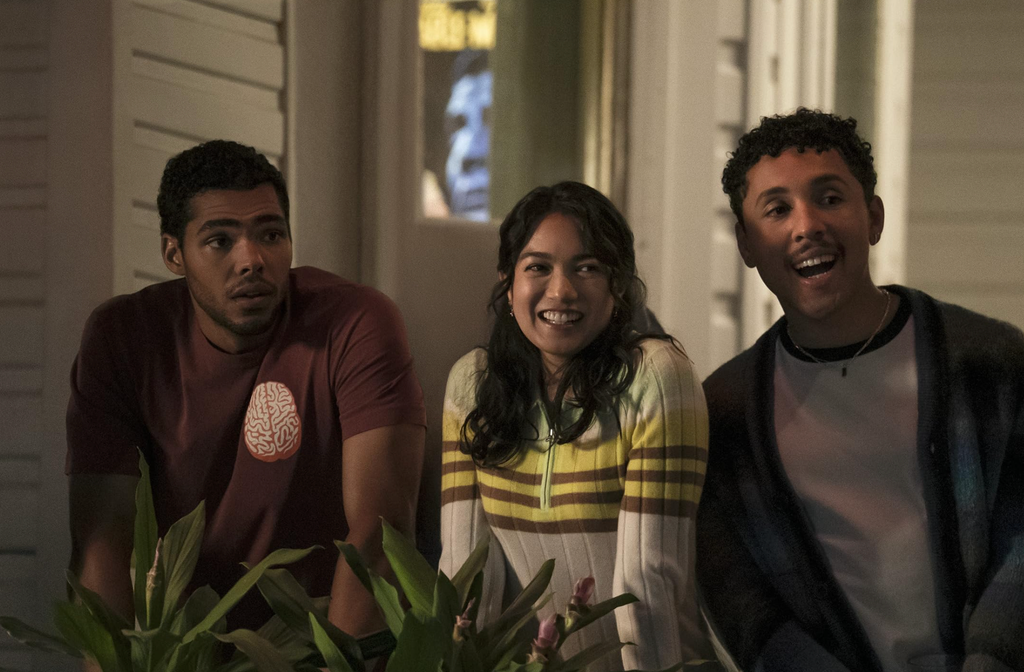
In the book, Malcolm knows from the beginning that Olive and Adam’s relationship is fake, giving Olive someone to confide in when those supposedly fake feelings start becoming…well, not so fake.
The movie changes this. As far as Olive knows, none of her friends are in on the secret—including Anh, the entire reason the fake relationship started in the first place.
Or, at least, that’s what Olive thinks.
The movie eventually reveals that Anh knew all along because, well…she knows her best friend! 😂
I actually liked this change. Olive starts fake dating Adam because she wants Anh to feel comfortable dating Jeremy, only for us to discover that Anh saw right through the whole thing. Olive was trying to protect Anh’s feelings, while Anh understood Olive better than Olive realized.
#3 The Book Gives Us More of Olive and Adam’s Backstories
One of the more understandable differences is that the movie doesn’t dive quite as deeply into Olive and Adam’s backgrounds. After all, a book has a lot more time to give us those little character details.
In the novel, we learn that Adam is Dutch, speaks Dutch, and grew up as the only child of wealthy parents who weren’t particularly involved in his life. We also learn more about Olive’s background, including that she’s originally from Canada.
None of these details dramatically change their love story, but they do make the book versions of Olive and Adam feel a little more layered—especially Adam, whose backstory gives us more insight into the person behind that grumpy-professor exterior.
#4 Olive Realizes Adam Was the Man From the Bathroom
Like the book, the movie opens with Olive struggling to change her expired contacts in a Stanford bathroom before her PhD interview when a mysterious stranger walks in. She can barely see him, but he ends up reassuring her about pursuing graduate school.
Of course, that stranger is Adam.
The movie brings this moment full circle by having Olive realize during their fake-dating relationship that Adam was the man who encouraged her that day—and she actually talks to him about it.
It’s a small change, but one I really liked. Their relationship technically began before either of them realized it, and acknowledging that first meeting gives the movie a cute little full-circle moment.
#5 The Movie Gives Olive a Different Ending
Perhaps the biggest change comes at the very end. In the book, Olive goes on to work at a cancer research lab in Berkeley, continuing the research that has been so important to her throughout the story.
The movie takes her career in a different direction and jumps ahead to show Olive and Ahn as professors working alongside Adam. And, funny enough, apparently, Adam’s reputation has rubbed off on her, because it’s pretty clear her students find Professor Smith rather intimidating, too.
I actually thought this was a cute way to end the movie. We meet Olive as a nervous prospective PhD student, and by the end, she’s the professor standing at the front of the classroom. It gives her story a nice full-circle moment while showing Olive and Adam building their careers (and their life) together.
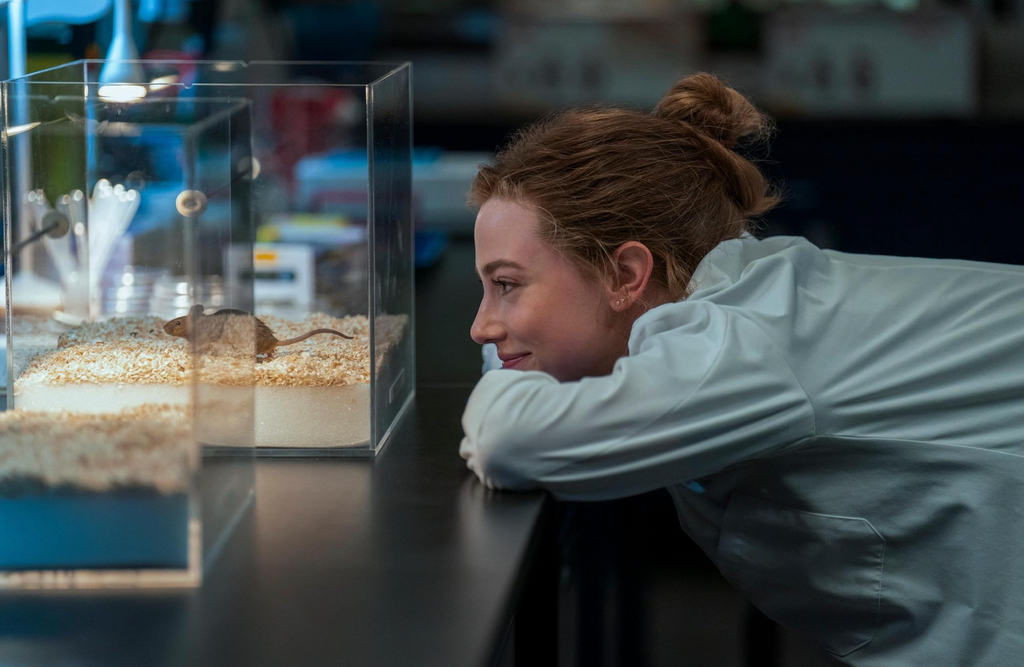
So, How Does The Love Hypothesis Movie Compare to the Book?
Overall, I was pleasantly surprised by just how closely The Love Hypothesis movie followed the book. There were changes, of course, but none that made the adaptation feel like a completely different story. The characters, chemistry, fake-dating chaos, and STEM-filled world that made the book so fun were all still there.
And honestly? That’s exactly what I wanted from this adaptation.
The movie may leave out a character here, change a detail there, and give Olive a slightly different ending, but it still feels like The Love Hypothesis. As someone who read the book first, there were so many moments where I immediately recognized what I was watching—and a few where I was genuinely surprised by how closely they recreated the book.
Was everything exactly the same? Nope. But would Olive and Adam approve? I think so 😉
Leave a Reply